Preserving and Preparing French Daguerreotypes at the George Eastman Museum
By Emily Phoenix, Conservation Associate and former Head Preparator, George Eastman Museum
At the George Eastman Museum, a glazing solution utilizing Optium Museum Acrylic® as reproduction reverse-painted passe-partouts was fabricated to help preserve French daguerreotypes. This creative use of anti-reflective, modern glazing materials enhances the display of these objects, while providing a historically accurate and protective presentation.
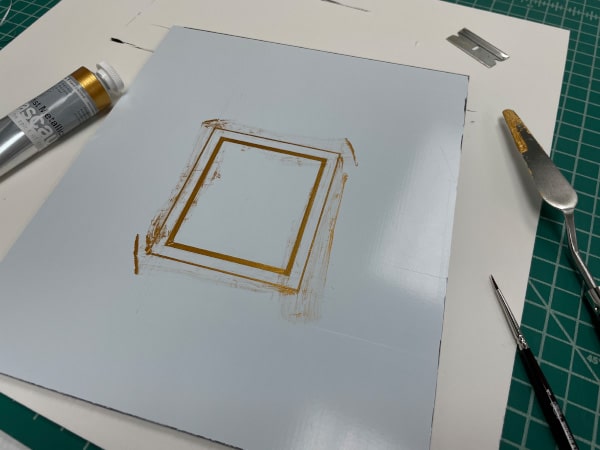
Applying gold acrylic paint to exposed Optium Museum Acrylic glazing. Image use courtesy of the George Eastman Museum.
The Gabriel Cromer Collection at the George Eastman Museum is considered to be among the most important collections of early photography in the world and the most extensive collection of early French photographic materials outside of France. The collection arrived in the United States in 1939, when the Eastman Kodak Company purchased it from Cromer’s widow. It has long been known as one of the foundational collections within the Museum’s holdings, as the materials arrived at the museum in 1949, just two years after the museum’s founding. The materials were formally donated to the Eastman Museum by Kodak in 1972.
The Gabriel Cromer Collection is representative of the practice of daguerreotypy in France and includes examples made by some of the medium’s most distinguished practitioners. These highly detailed and beautiful early photographs are extremely vulnerable to both chemical deterioration, such as tarnishing and corrosion, and physical deterioration, including abrasions and scratches. Because of this, daguerreotypes should always be housed under a protective cover glass to minimize exposure to their surroundings.
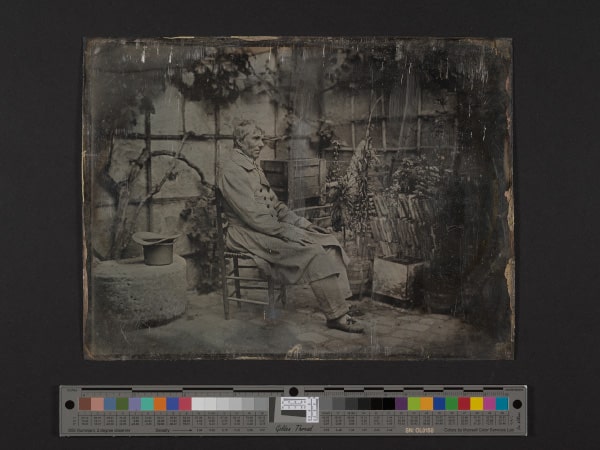
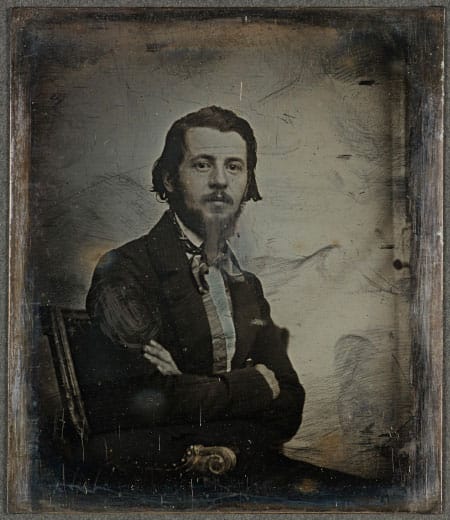
Before conservation and preparation. Hippolyte Bayard (French, 1801–1887) [Man seated in front of garden wall], ca. 1845. Daguerreotype. George Eastman Museum, Gift of Eastman Kodak Company, ex-collection Gabriel Cromer. 1976.0168.0010. Image use courtesy of the George Eastman Museum.
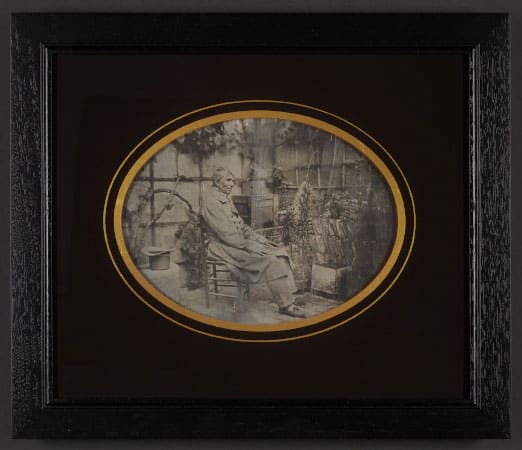
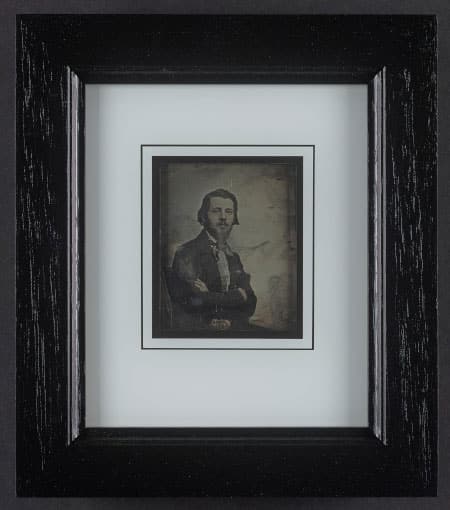
After conservation with completed reverse painted Optium Museum Acrylic® passe-partout. Hippolyte Bayard (French, 1801–1887) [Man seated in front of garden wall], ca. 1845. Daguerreotype. George Eastman Museum, Gift of Eastman Kodak Company, ex-collection Gabriel Cromer. 1976.0168.0010. Image use courtesy of the George Eastman Museum.
It is very common that the original cover glass appears dirty, but is actually showing signs of deterioration. Sometimes, the deterioration is so advanced that simple cleaning is no longer an option and the glass needs to be replaced. Similarly, the original binding, or other parts of the plate package may be long gone or adversely altered, so that they no longer protect the daguerreotype the way they might once have done.
To provide the daguerreotypes in the collection with an uncompromised preservation environment, either borosilicate or chemically strengthened glass is used for the new glazing, and if other components of the plate package need to be replaced, chemically inert and non-hygroscopic materials are chosen. However, replacing a reverse painted cover glass – which is typical for French daguerreotypes – presents an additional challenge, and in some cases the original cover glasses are missing. That’s when a secondary glazing, a reproduction cover glass placed on top of the new primary glazing, may be a viable and attractive solution.
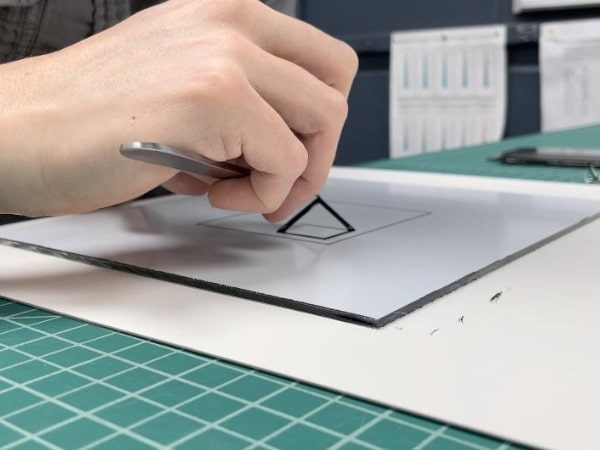
With the support of a generous Foundation for Advancement in Conservation (FAIC)/Tru Vue® Conservation and Exhibition Grant it was possible for the conservation and preparation staff at the museum to address the preservation and display issues for a number of daguerreotypes in the Cromer Collection. First, several original plates in need of new glazing were rehoused. Next, reproductions of reverse painted cover glasses were made by using Optium Museum Acrylic®. The acrylic’s protective film was carefully cut away to create a mask for applying the acrylic paint.
Creating a mask from the protective barrier film on Optium Museum Acrylic . Image use courtesy of the George Eastman Museum.
When curved openings, such as ovals, arches, or rounded corners, were needed, masks were created by using machine cut vinyl. Once the gold or black accent paint was applied in narrow lines around the window, the remainder of the mask was removed to apply the white or black background. The reverse painted glazing was then checked for any areas of missing paint and a second coat of paint applied if needed. The painted area was covered with polyester before being layered over the daguerreotype plate package.
Through this project, the daguerreotypes can be displayed safely with passe-partouts and frames that reference historic styles, providing important context for these unique objects and enhancing the overall aesthetic experience for museum visitors.
The author wishes to acknowledge contributions to this project by colleagues at the George Eastman Museum, including Jamie M. Allen, Stephen B. and Janice G. Ashley Curator; Taina Meller, Conservator in Charge; and Sarah Casto, former Assistant Conservator. Additional thanks to Heather Shannon, former Associate Curator at the Eastman Museum, and Predrag Dimitrijevic, Supervising Department Technician, Metropolitan Museum of Art.
Additional Project Images
Before conservation and preparation. Cromer’s Amateur (French, active 1845–1855) [Self-portrait], ca. 1850. Daguerreotype. George Eastman Museum, Gift of Eastman Kodak Company, ex-collection Gabriel Cromer. 1970.0001.0025. Image use courtesy of the George Eastman Museum.
After conservation with completed reverse painted Optium Museum Acrylic® passe-partout. Cromer’s Amateur (French, active 1845–1855) [Self-portrait], ca. 1850. Daguerreotype. George Eastman Museum, Gift of Eastman Kodak Company, ex-collection Gabriel Cromer. 1970.0001.0025. Image use courtesy of the George Eastman Museum.
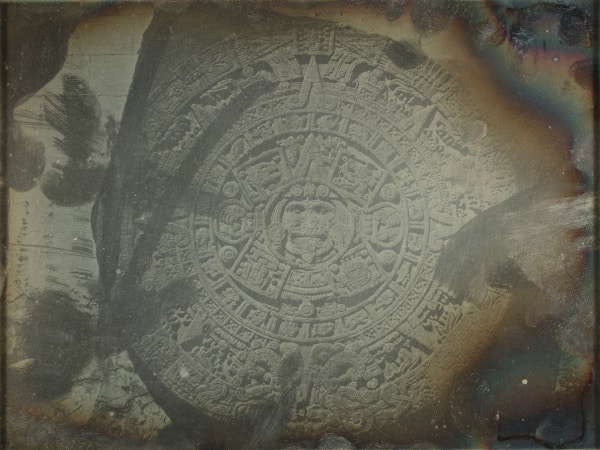
Before conservation and preparation. Louis Prélier (French, active Mexico, 1839–1840) [Aztec Calendar Mounted to Exterior Wall of the Metropolitan Cathedral of the Assumption of the Most Blessed Virgin Mary into Heaven, Mexico City], January 26, 1840. Daguerreotype. George Eastman Museum, Gift of Eastman Kodak Company, ex-collection Gabriel Cromer. 1976.0168.0144. Image use courtesy of the George Eastman Museum.
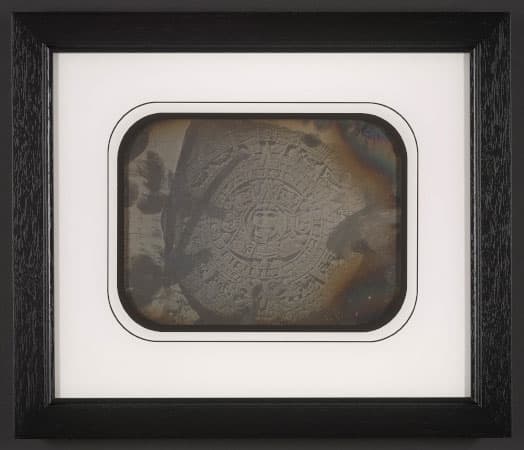
After conservation with completed reverse painted Optium Museum Acrylic® passe-partout. Louis Prélier (French, active Mexico, 1839–1840) [Aztec Calendar Mounted to Exterior Wall of the Metropolitan Cathedral of the Assumption of the Most Blessed Virgin Mary into Heaven, Mexico City], January 26, 1840. Daguerreotype. George Eastman Museum, Gift of Eastman Kodak Company, ex-collection Gabriel Cromer. 1976.0168.0144. Image use courtesy of the George Eastman Museum.
Learn more about this project:
About The Author(s)
Emily Phoenix
Emily Phoenix, Head Preparator at the George Eastman Museum
Emily Phoenix has worked in framing, exhibition installation, and photography conservation for over fifteen years. During her eight years as Head Preparator at the George Eastman Museum, Emily and the preparation team were responsible for the framing, mountmaking, lighting, and installing for over fifty exhibitions. In 2023 she was promoted to the position of Conservation Associate and began working directly on the documentation, treatment, and preservation of the Museum’s collection. She received her MA in Photographic Preservation & Collections Management from the Toronto Metropolitan University/George Eastman Museum, and previously worked at Chicago Albumen Works in the Berkshires as a conservation technician.