
By Susan Duhl – Art Conservator/Collections Consultant
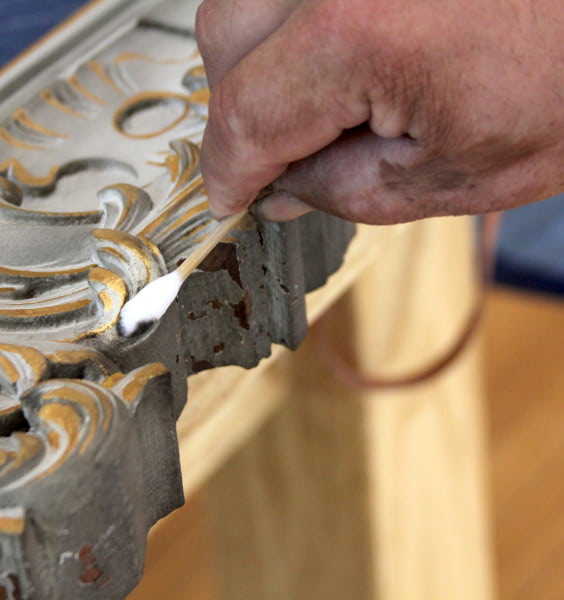
Fire-related disasters result in a complexity of problems from chemical and physical damages, and from the extreme sensitivity of handling soot-covered and burnt objects. Heat, charring, smoke, soot, ash, water and chemical extinguishers contribute to deleterious affects on all types of materials. Soot is the black oily and solid residue of a fire, with 60% or greater carbon content. Fire residues are abrasive, acidic and contain carcinogens.
Regardless of the magnitude or source of the fire, predisaster training and personal protective equipment (PPE) are essential. PPE should include hard hats, boots, respirators, gloves, safety glasses, or other items. Urgency in response is needed since soot becomes increasingly bonded to surfaces and more difficult to remove as soot particles interact with humidity, chemically cross-link and become compacted. Soot will cause corrosion, pitting, and discoloration in organic materials. Low oxygen smoldering fires result in wet, smoky residues that are difficult to remove. High oxygen fires result in dryer residues that are easier to remove.
After a fire, the sooty, wet, burnt artifacts must be handled carefully. Touching and treading on sooty objects will compact and embed contaminants and discoloring elements into surfaces by breaking soot agglomerations into microscopic particles. Secondary damages can result from compromised constructions, weakened joints and shattered glass. Stacking and tight wrapping will compress soot-affected contents and hinder odor reduction.
To avoid cross- or re-contamination, protect walking paths, clean work surfaces, change gloves and tools often, and locate cleaned materials to an unpolluted storage area. Be aware that soot easily is dispersed through air handling systems and via moving people and objects.
Triage for salvage is based on the type and sensitivity of objects. Items with compromised structures and the heaviest soot layers are priority conditions to address. Porous, fibrous, organic materials, such as paper and textiles are especially sensitive. Soot removal is most successful when artifacts are vacuumed before handling, packing or moving. Textiles and papers should not be folded or rolled, if possible. Strong supports are needed for all types of materials when moving.
Successive steps for recovery include mechanical, solvent and/or aqueous-based cleaning. Mechanical cleaning techniques must be implemented without rubbing, smearing or embedding soot. Solvent or aqueous cleaning techniques must be done without dissolving oily components of soot or driving them into artifacts’ surfaces.
Progressive cleaning steps include:
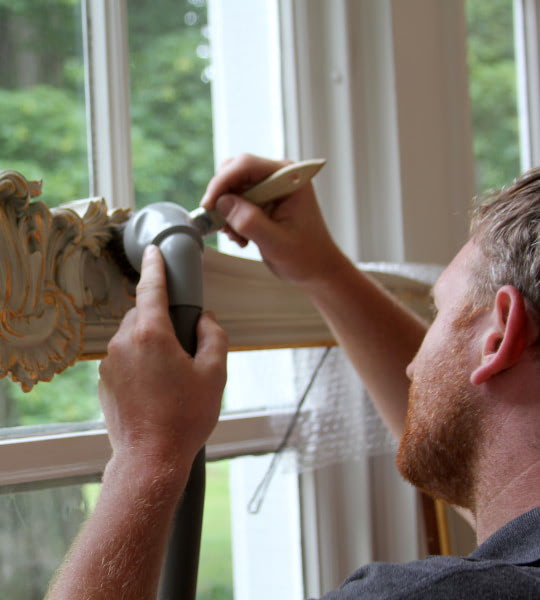
- Vacuum with a variable speed HEPA-filtered vacuum, available in different types and sizes. Long hoses and minihoses, replacement attachments, vacuum cleaner filters and vacuum bags are helpful. Vacuuming may be done through a screen to protect against loss. Screens and brushes should not touch sooty surfaces, which may smear or embed the soot.
- Vacuum outer surfaces then proceed to cleaning crevices and interior folds. Clean the outside of glazed frames before removing the framed contents.
- Particulate matter also may be blown from surfaces with caution, using a low setting on the vacuum or compressed air can.
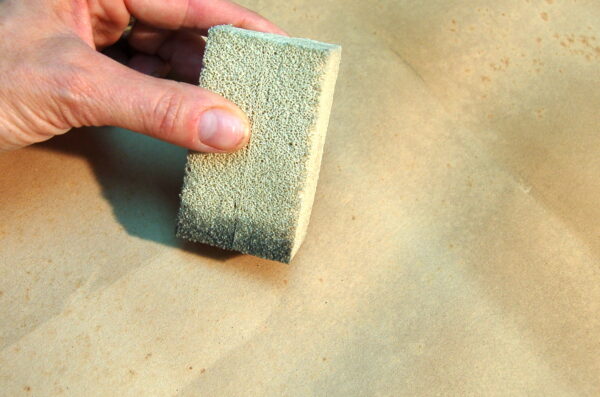
- After vacuuming, surface cleaning can be done with “dry cleaning” sponges (vulcanized cis-1, 4-polyisoprene, calcium carbonate filler, also known as “chemical” or “soot” sponges). Sponges can be custom cut to a variety of shapes and sizes.
- Other useful surface-cleaning supplies include art gum, vinyl and powdered erasers; Groom Stick and soft brushes. Cloth wipes and glass micro-beads may be used to clean non-porous materials.
- Aqueous or solvent cleaning may be done after careful testing, and after soot reduction by vacuuming and other mechanical techniques. Pure water is unlikely to remove oily soot. When used safely, diluted solutions of conservation-quality detergents, surfactants, alcohols or organic solvents on swabs, soft pads, brushes, sponges and/or gels can be effective.
Several odor-reduction options are available. The choice depends on the disaster magnitude and available resources. Airing cleaned artifacts in a soot-free area with circulating air is convenient and cost, but requires space and inventory control. Odor-absorbing chambers can be made with carbon, baking soda, unscented clay cat litter or zeolites, which are available in powder form or in MicroChamber® papers. Unsuitable odor-reduction techniques include thermal deodorization, which uses high temperatures, and ozone, which deteriorates organic materials.
Packing and storage of fire-damaged materials are also critical factors to increase the opportunity for successful restoration. Maintain storage temperature and humidity control at levels below 55% relative humidity. After salvage, the collection materials will need to be further assessed and triaged to determine priorities for conservation treatment.
To learn more from those who sadly had to recover artistic works and artifacts after a fire, please see the Journal of the American Institute for Conservation’s articles on the 1990 fire at the Royal Saskatchewan Museum in Regina, Saskatchewan; authored by Sarah Spafford-Ricci and Fiona Graham; “Part 1: Salvage, Initial Response, and the Implications for Disaster Planning” and “Part II: Removal of Soot from the Artifacts and Recovery of the Building.”
About The Author(s)
Susan Duhl
Art Conservator/Collections Consultant
Susan Duhl is an art conservator and collections consultant, providing assessments, consultations and conservation treatment for institutions and private individuals throughout the United States and internationally. Her specialty in emergency response includes weather, accidental and man-made disasters in cultural institutions. She is a volunteer member of the American Institute for Conservation Collections Emergency Response Team (AIC CERT). She responded immediately to Mississippi after Hurricane Katrina in 2005 and to Hurricane Sandy in 2012-13.
In addition, Duhl works for the Federal Emergency Management Agency (FEMA) as a specialist archives consultant for governmental collections in New Orleans to recover damages from Hurricane Katrina. She develops strategic disaster recovery plans, including response actions for hurricanes, historic mansion furnace malfunction and fires, including a large -plan developed a for historic sites in the state of New Jersey. She also provides emergency and general assessments surveys of historic collections for the Heritage Preservation Conservation Assessment Program (CAP), including numerous sites after Hurricane Sandy.
Her lectures and workshops include informative and practical information on disaster assessment, prevention, preparation and salvage for all types of collections held by cultural institutions, galleries and private individuals. Examples of her training sessions and lectures programs include:
- Eugenides Foundation and The American School for Cultural Studies, Athens Greece, Disasters Preparation and Salvage for Cultural Institutions, Dec. 16-20, 2013
- New York Archivists Roundtable, Disaster Planning for Archives and Their Communities, New York Archives Week Symposium, Oct. 2013
- New York Council for the Humanities, After Sandy Workshop, June 2013
- Delaware Valley Archivists Group: Disaster Triage & Recovery, Philadelphia, Dec. 2012
- Society of Winterthur Fellows, University of Delaware, Winterthur Museum, Hurricane Katrina Response, Feb. 2005
- Pennsylvania Federation of Museums /Statewide Conferences, Disaster Response to Hurricane Katrina, Oct. 2006