Step by Step Process: Adapting an Existing Frame for Archival Re-use

By Virginia Whelan, Textile Conservator in Private Practice

Optium Museum Acrylic® A frame is both ornamental and functional, drawing the viewer’s attention to the artwork and offering protection from handling and ambient elements. With a few adjustments, most any older wooden frame—whether it is historic, original to the artwork, or otherwise—can be adapted for re-use to become archival as well as ornamental and functional.

In this case study, the client wanted their nearly 200-year-old textile, a copperplate printed on plain weave cloth, to remain with its existing frame and glass even though they were not original to each other. The carved, gilded, wooden profile had a lovely patina from age and use, and the old glass had character.

To adapt the existing frame for archival re-use, the rabbet was made deeper and a piece of Optium Museum Acrylic®  was added behind the glass. The Optium Museum Acrylic  protects the textile from harmful UV-light and physical damage should the glass break, and its anti-reflective quality makes it invisible in the package.  The step by step process is documented below.

Conservation of the Textile

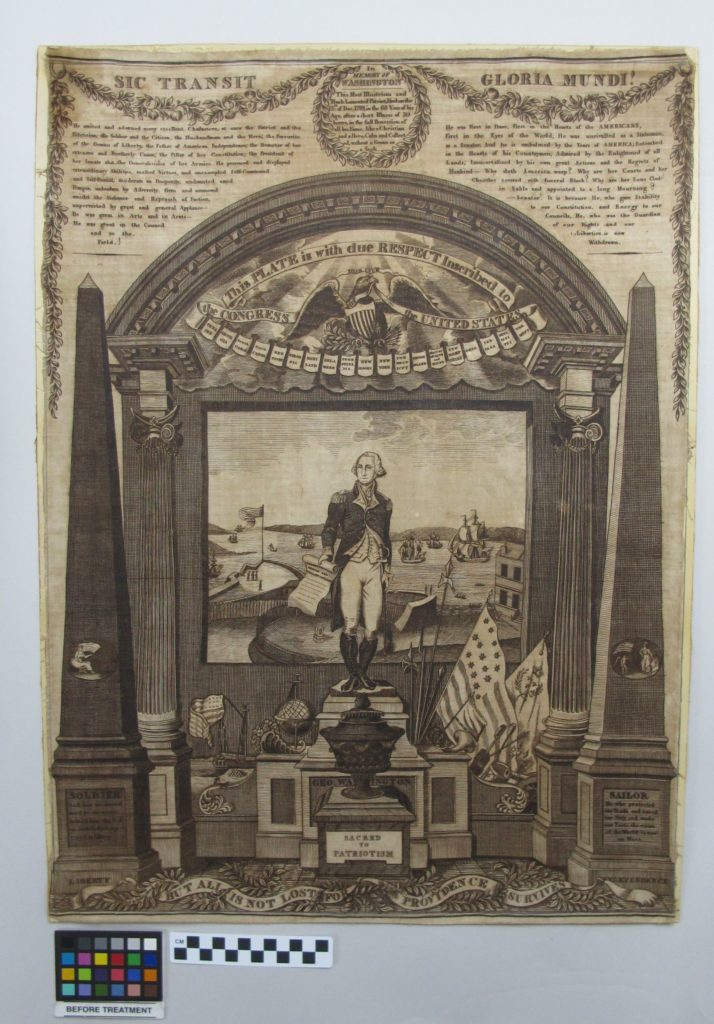
Historic copperplate print photographed before undergoing conservation treatment.
Before treatment. The textile had been adhered to an acidic cardboard backing using a non-archival adhesive. The visible yellowing around the perimeter of the textile is evidence of the degraded adhesive.
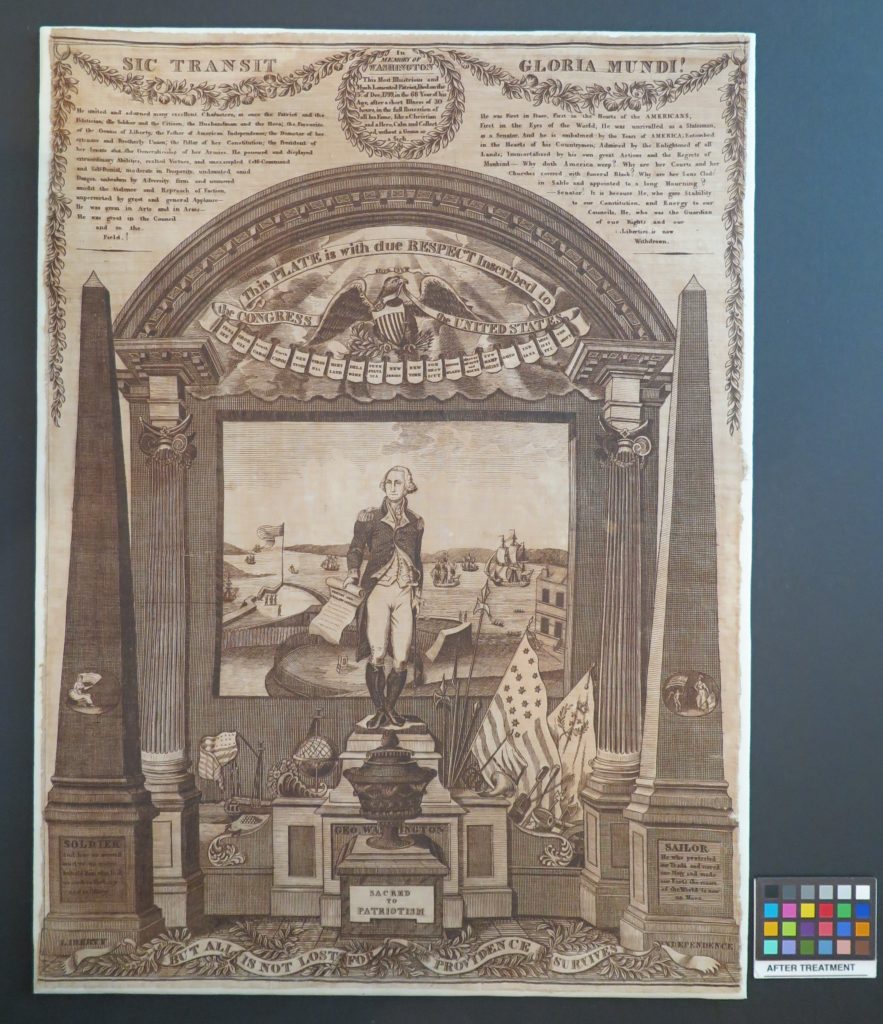
Historic copperplate print featuring an ornate design and text after conservation treatment.
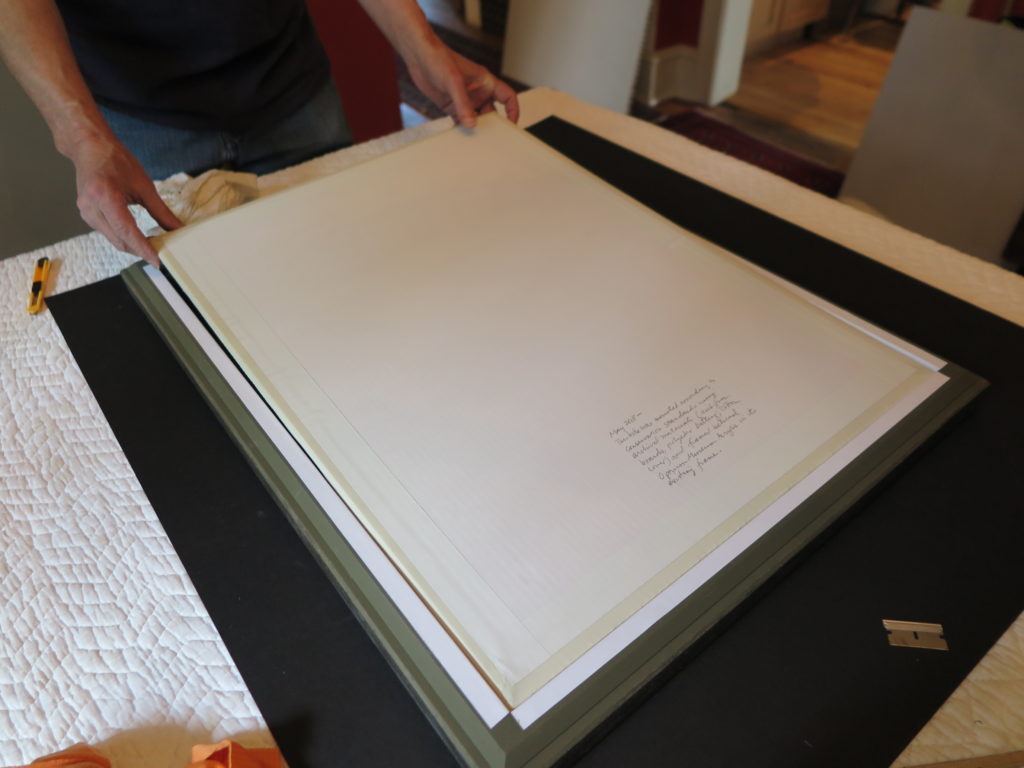
After treatment. The textile, after its careful removal from its non-archival mount, was stitched to a padded mount support made from acid-free boards covered with needle-punched polyester batting and a cotton show fabric.

Retro-fitting the Frame

Founded in 1989, APOYOnline is a non-profit organization whose mission is to promote communication, exchange and professional development in the field of heritage preservation in the Americas and in Portuguese and Spanish speaking countries. Participants from many specialties, age groups and levels of experience represented major institutions from the region, such as universities and national schools, regional and national research centers and foundations, regional and national libraries and archives, museums, governmental cultural institutions and ministries of culture, professionals in private practice, consultants, funding organizations and sponsors.

The conference took place at the Centro de Formación de la Cooperación Española (AECID), in the historic center of La Antigua. The topics selected for the four-day event were risk assessment, emergency preparedness, and post-disaster response and recovery. There were two program components: presentations in the form of talks or posters and training workshops, which included theoretical modules, practical exercises, and emergency drills offered by a team of instructors from Brazil, Colombia, and the United States.

Participants presented 13 papers, covering issues such as the challenges of emergency management in a historic building, case studies in emergency planning, lessons learned from floods, and salvaging monuments and historic buildings after an earthquake, among many others. The poster session included 20 posters presenting a range of topics including emergency plans in libraries, archives, and museums and case studies in emergency response and recovery from earthquakes and water related disasters.

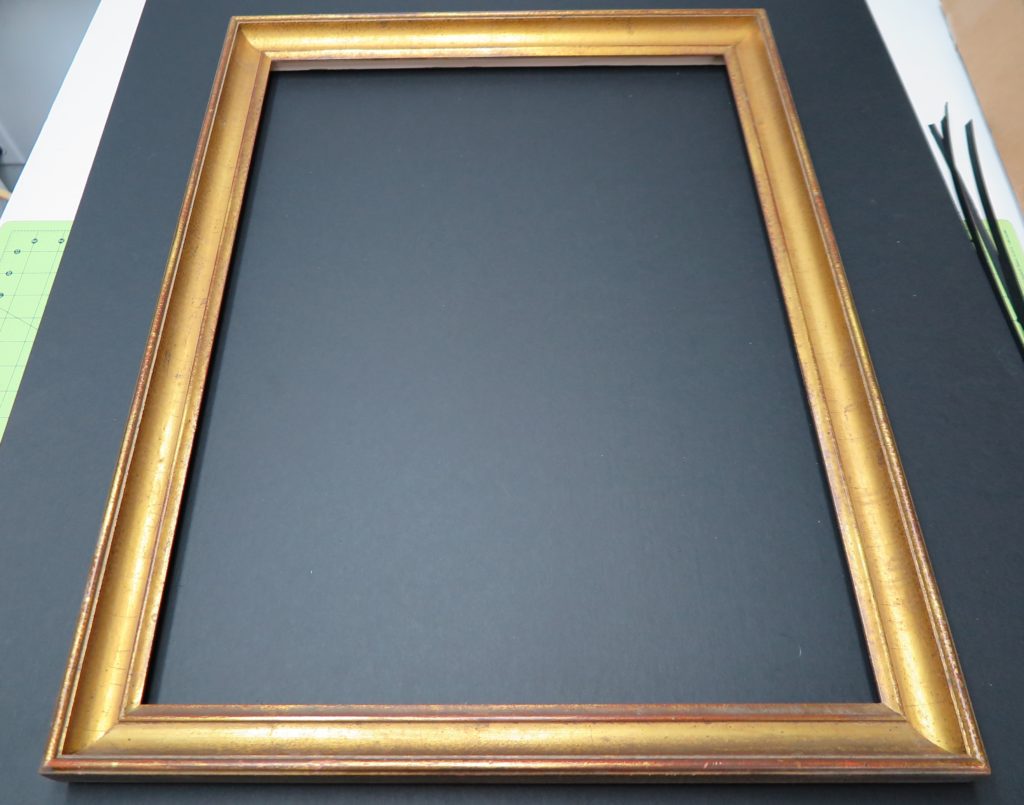
Empty gold frame prepared for conservation-grade artwork mounting.
The Original Frame
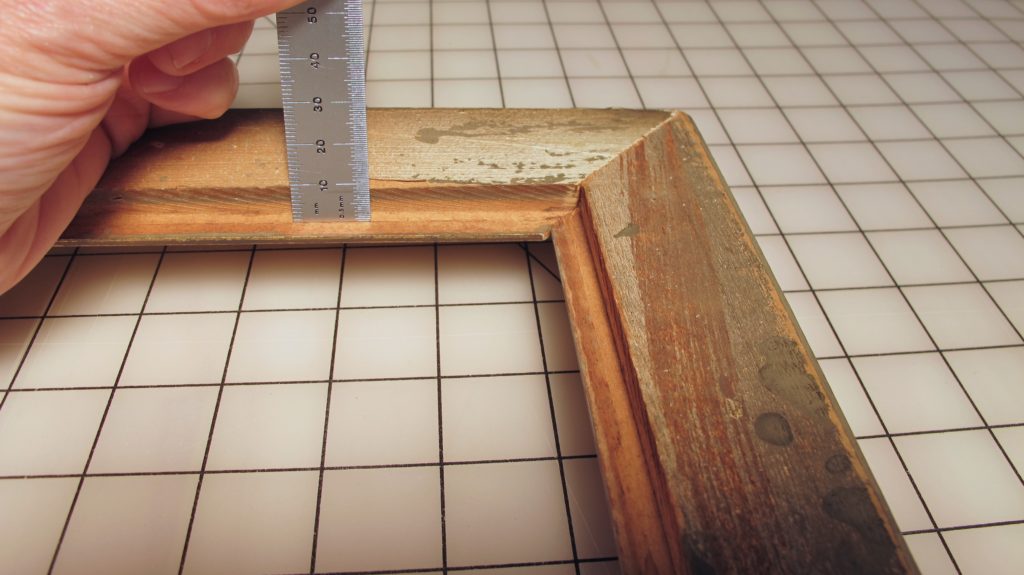
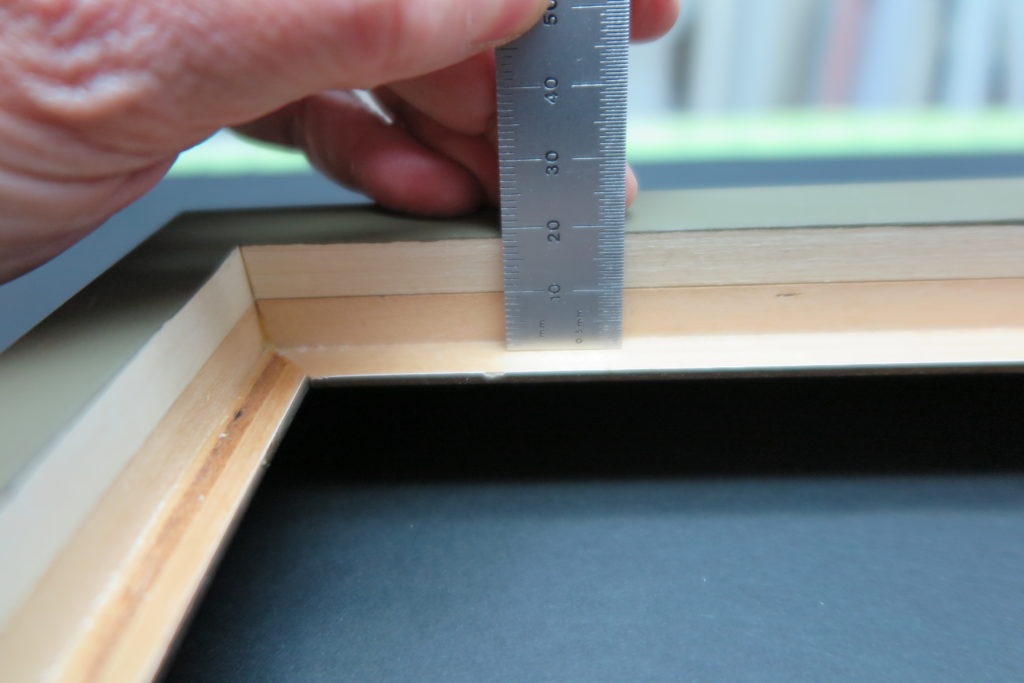
Hand measuring the depth of an aged wooden frame with a metal ruler.
The original frame was not deep enough to adequately accommodate the textile’s new padded mount, the spacers, the glass, and the Optium Museum Acrylic.
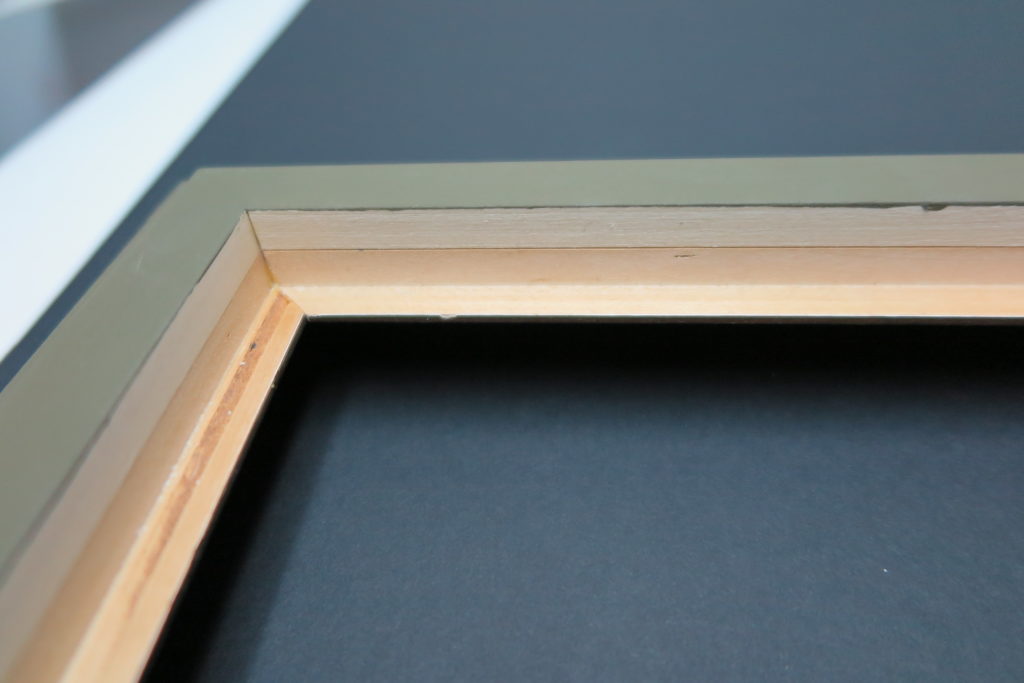
Close-up of a wooden frame corner showing layered construction for artwork mounting.
The back of the existing frame is built out using poplar secured with screws.
Hand using a metal ruler to measure the depth of a wooden frame.
The total depth needed for the adapted rabbet is calculated by the adding up the dimensions of the individual elements: 3/16” mounted textile, 1/8” spacer, 3mm Optium Museum Acrylic, 1/16” spacer, 1/8” existing glazing.
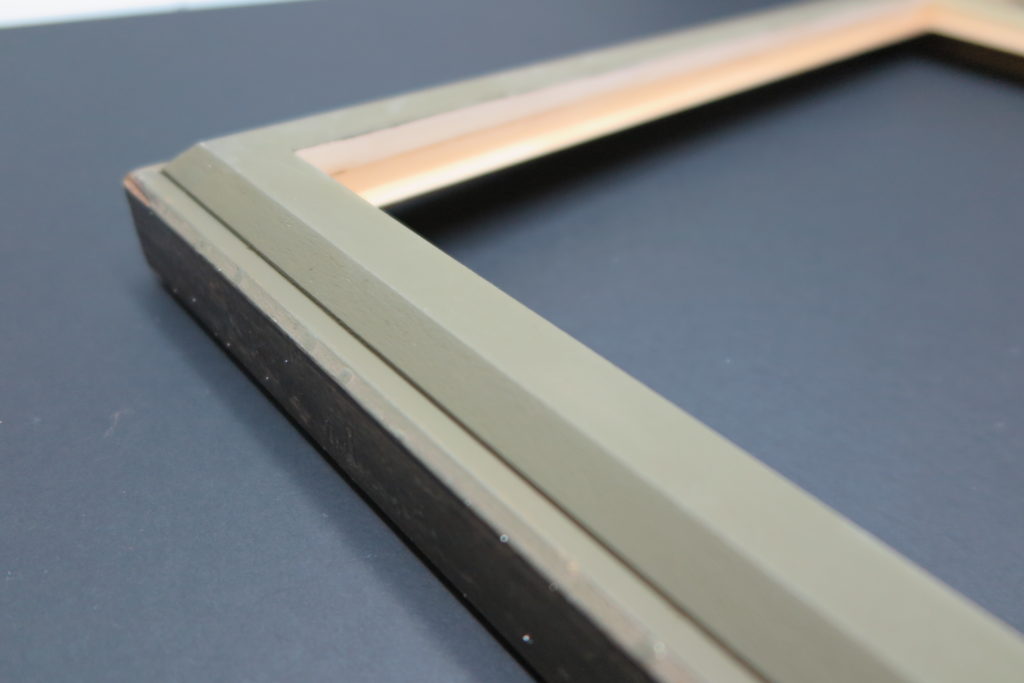
Close-up of a wooden frame build-out with layered components for artwork mounting.
The beveled edge and its neutral color of the build out minimize its visual dimension when hanging and viewed from the side.

Sequence of Assembly

Preservation experts based in Colombia, David Cohen of the Fundación Erigae and Mario Omar Fernández of the Universidad de los Andes, conducted training sessions in risk management. They first outlined the tenets of successful risk evaluation before a taking participants on a visit to the Centro de Investigaciones Regionales de Mesoamérica (CIRMA) where participants were able to apply this new knowledge. Divided into five groups, participants noted potential risks in the building envelope, archives, library and other spaces. CIRMA founder and staff generously welcomed the large group into their workspaces, collections, and storage area, allowing participants to discuss their achievements and challenges in preserving archival collections in a historic building.

Beatriz Haspo, APOYOnline manager, and Alan Haley, Preservation Specialist at the Library of Congress, organized additional workshops that emphasized navigating different communication styles, problem solving and team building, highlighting their broad ranging experiences in risk evaluation and disaster management in the United States and abroad. They led presentations on emergency response and the salvage of water-damaged materials, culminating with a salvage drill that tested the participants’ grasp of wet salvage, communication, and organization. Everyone worked together via role playing with various duties, including managing opportunistic robbers and members of the media in order to safely and effectively organize the salvage of wet and soiled material typically found in libraries, archives, museums, historical houses and private collections. Participants handled books, works on paper, documents on paper and parchment, photographs, audio-visual material, ceramics, metal, and textiles, before reconvening at the end of the drill to discuss the lessons learned and how to implement the gained experience in their home institutions.

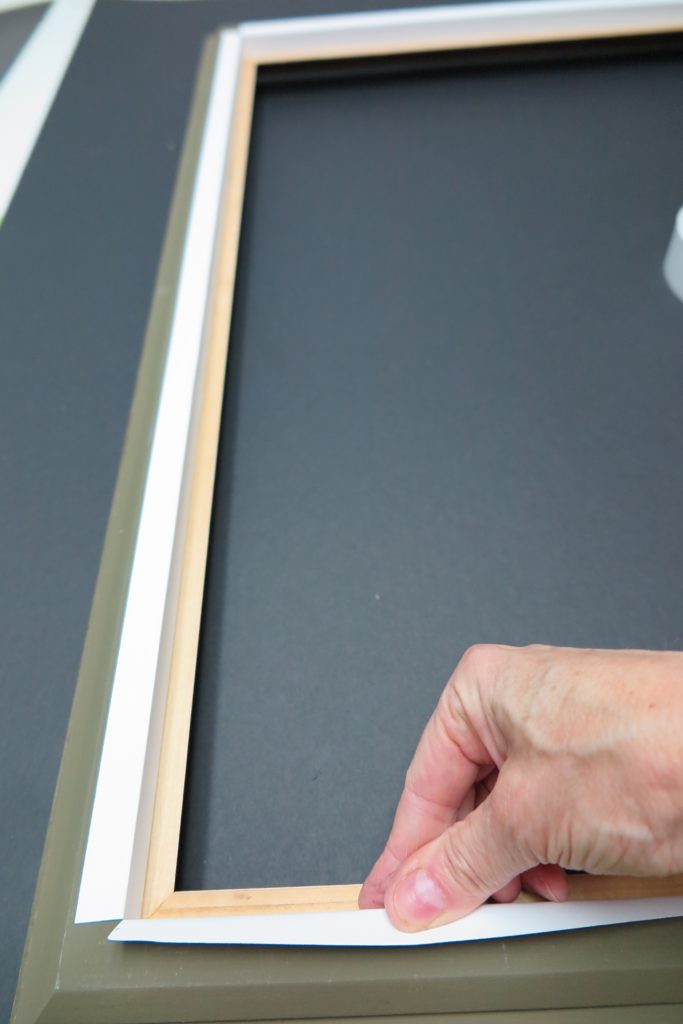
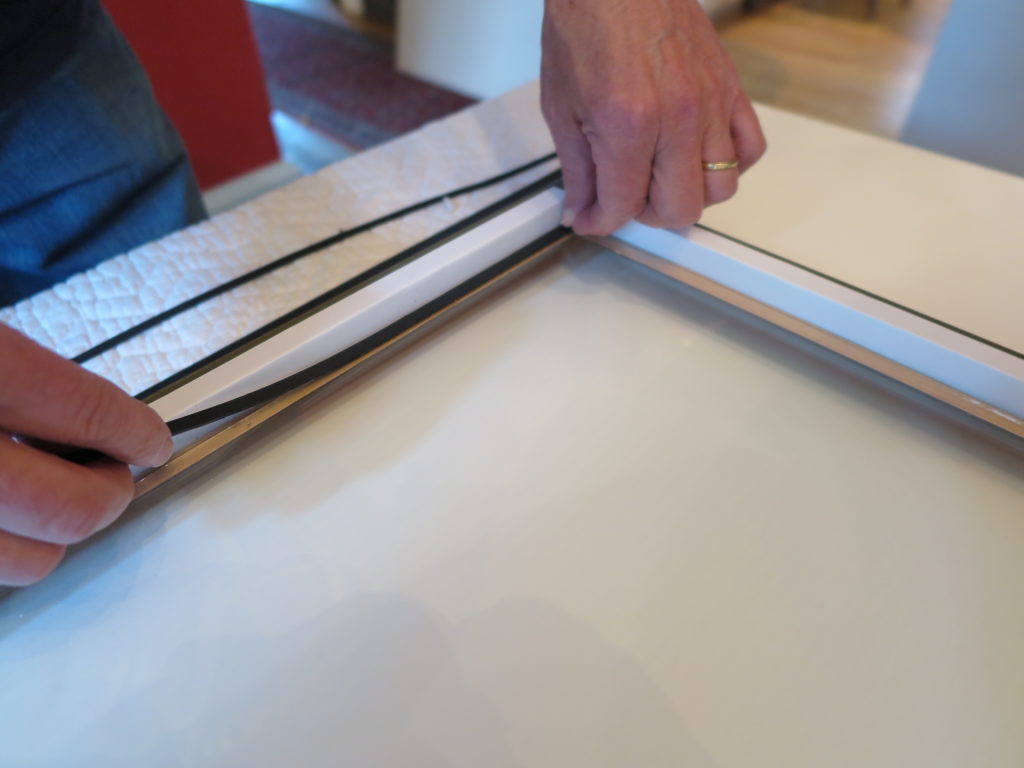
hand placing frame-sealing tape to the rabbet.
The rabbet is lined with frame-sealing tape made with a foil layer and non-yellowing, pressure-sensitive adhesive. The tape acts as a barrier to prevent the inherent acids found in wood from migrating into the textile.
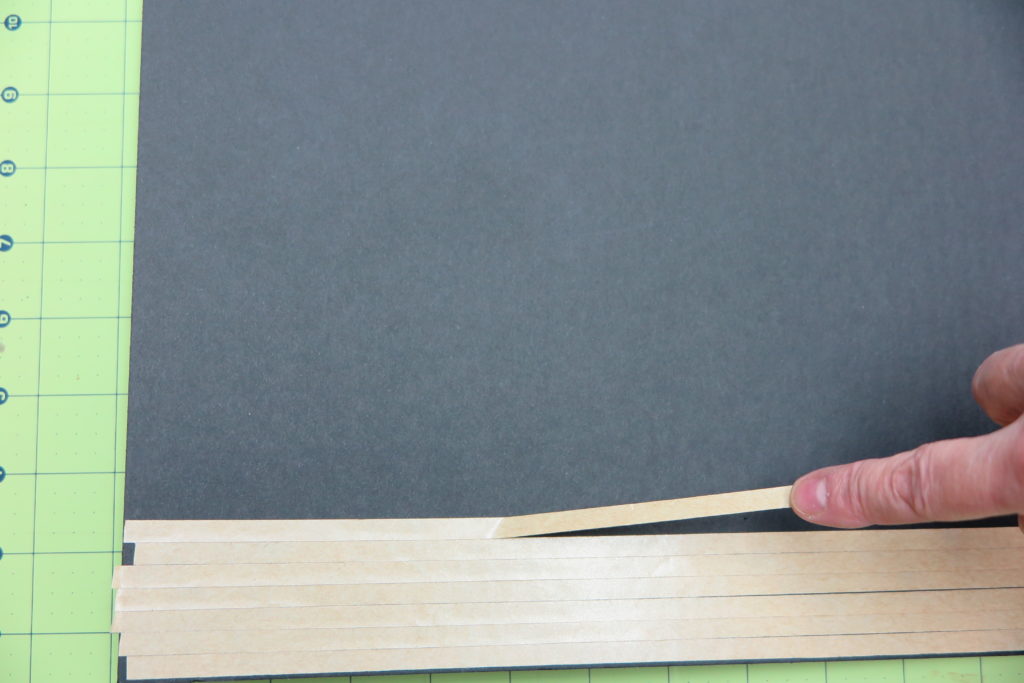
Hand applying adhesive strips to a backing board for artwork mounting.
The spacer between the Optium Museum Acrylic and the original glazing is prepared by cutting 1/4”-wide strips of 2-ply, black, acid-free board and applying 3M #415 double-sided tape.
Hand placing a wooden spacer inside a frame during preparation for artwork installation.
The original glass is placed in the prepared frame. The 2-ply spacers are aligned on the glass with the double-sided tape facing down. The small gap provided by the spacers prevents contact between the glass and the Optium Museum Acrylic, which can result in a moiré pattern, also known as Newton’s rings.
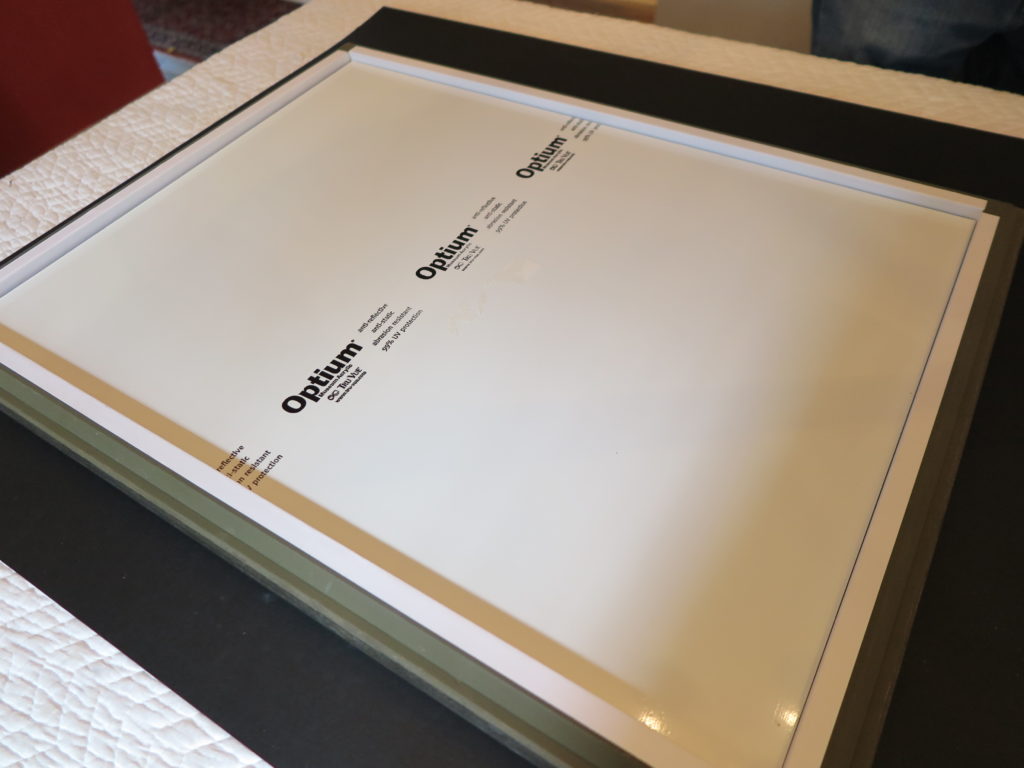
Protective Optium Museum Acrylic glazing installed inside a frame for artwork preservation.
The 3mm Optium Museum Acrylic is positioned in the frame.
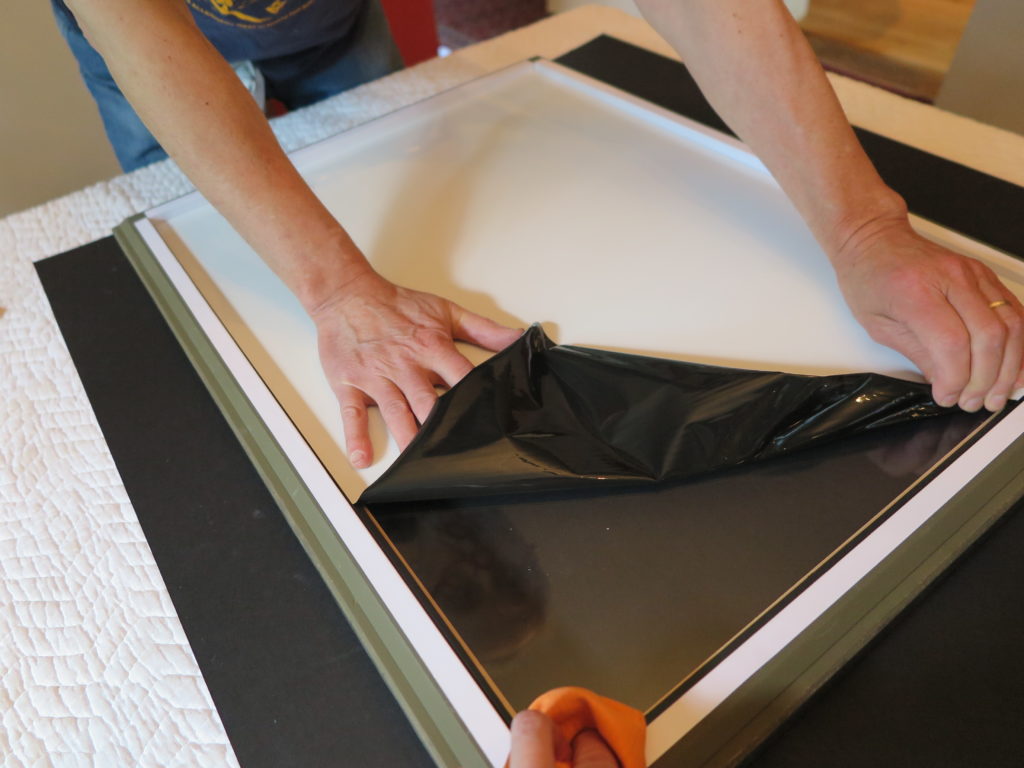
Hands peeling back the protective tape during artwork framing process.
The film protecting the new glazing is removed while it rests in the frame.
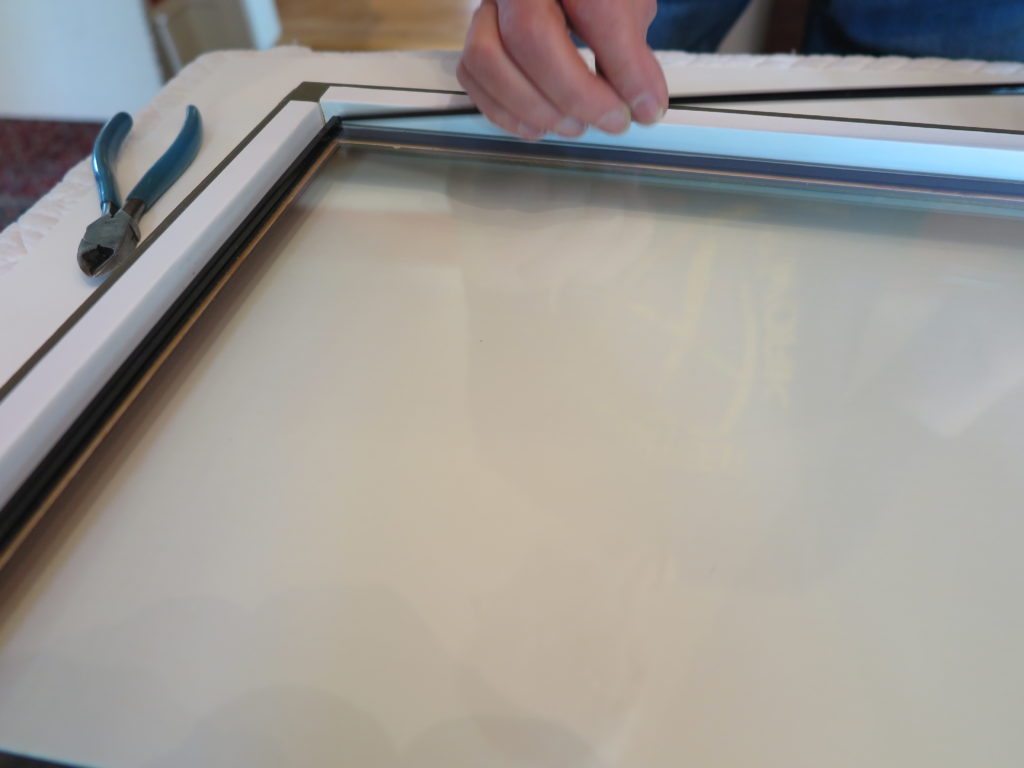
Hand installing a black spacer strip along the edge of glazing inside a frame.
Black 1/8” acrylic spacers are positioned on the Optium Museum Acrylic.
Hands placing a textile-mounted artwork package into a prepared frame.
The edges of the textile’s mount rest on the spacers.

Documentation of Work

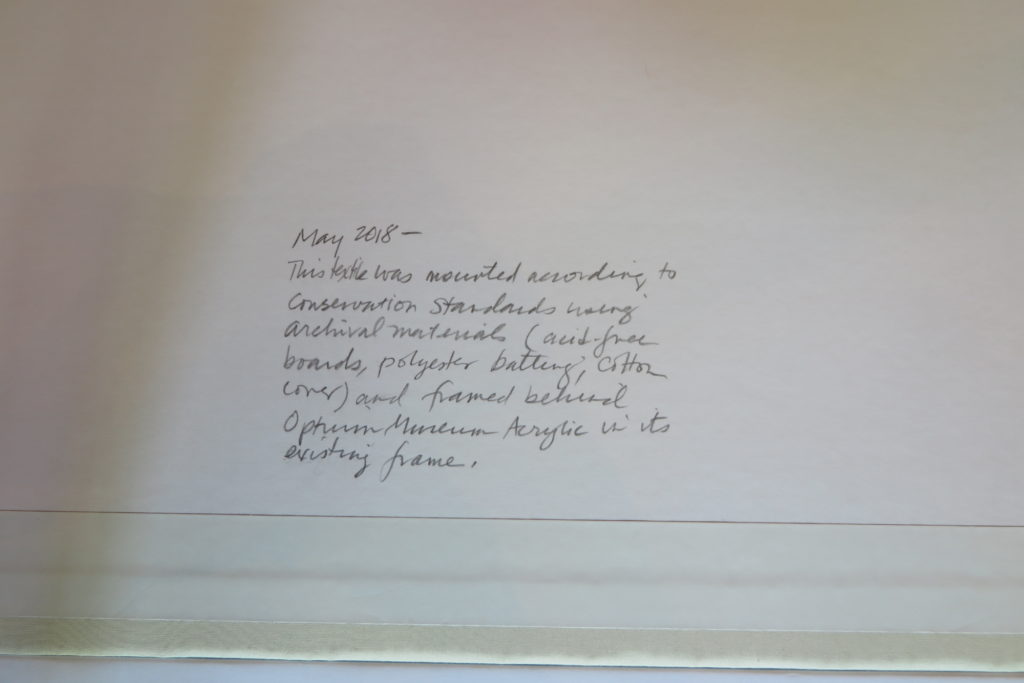
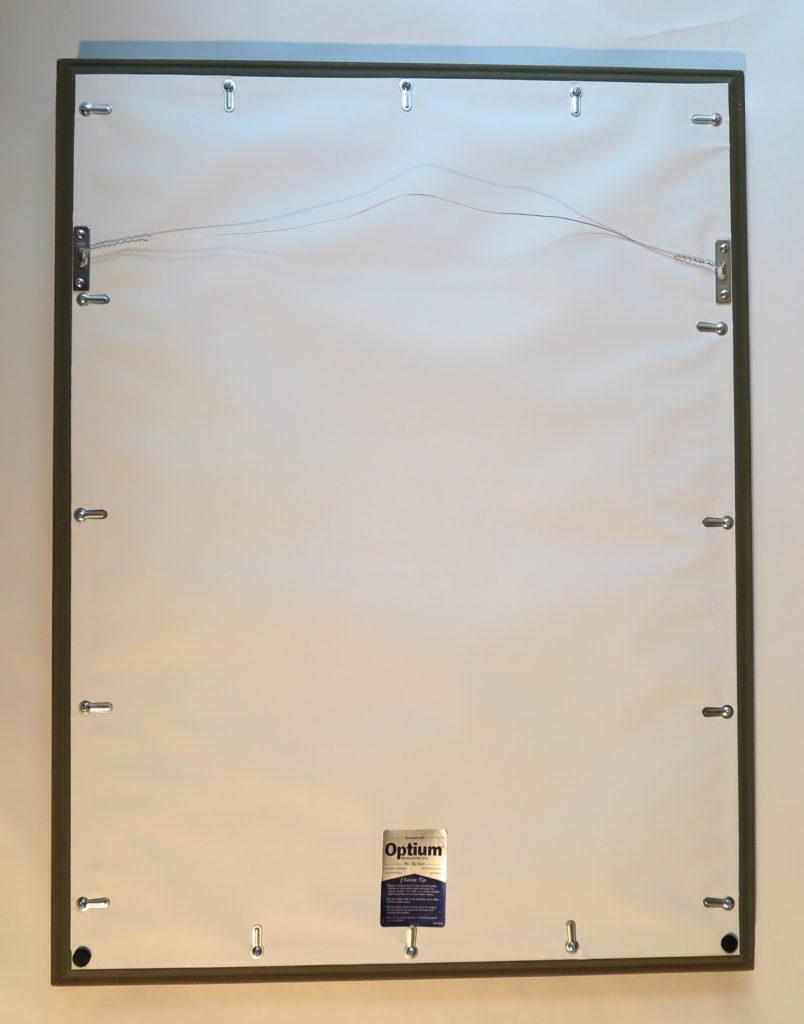
Identifying the use of archival materials is important. The handwritten label on the back of the textile’s mount and the Optium Museum Acrylic label adhered to the dust cover inform future owners of when and how the textile was framed, and what materials were used.

Handwritten note detailing conservation standards and materials used for mounting artwork.
The label reads: “This textile was mounted and framed according to conservation standards using archival materials (acid-free boards, needle-punched polyester batting, cotton cover, Optium Museum Acrylic) while retaining the existing frame and glass.”
Rear view of framed artwork with sealed backing and Optium Museum Acrylic label.
The Optium Museum Acrylic label adhered to the dust cover.
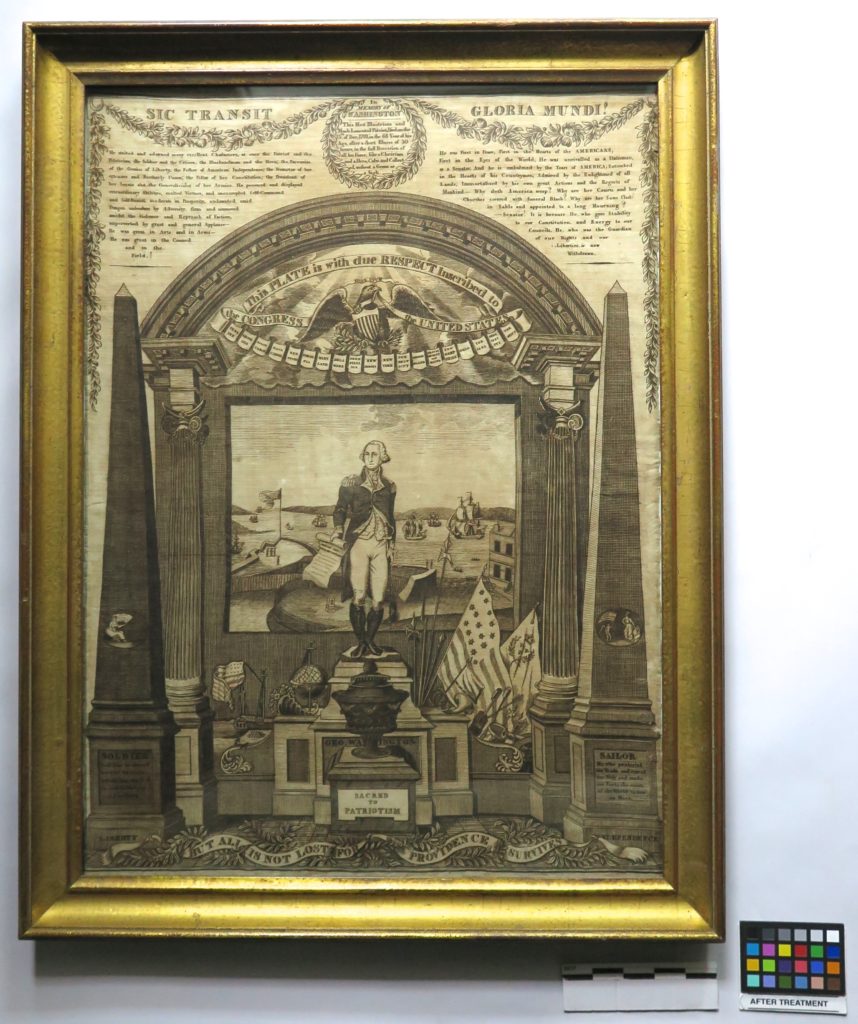
Historic copperplate print mounted in a gold frame following conservation treatment.
“Sacred to Patriotism” portrait of George Washington, 1819. Copperplate printed on plain weave cotton in Glasgow, Scotland. 19 inches x 25.5 inches (48.26 cm x 64.77 cm). Marked “Printed and published at Glasgow by C.G. 1819”, Private owner.

The finished product! The textile is now mounted properly, protected from UV-light, and displayed in its existing, and now archival, frame and glass.

About The Author(s)

Virginia Whelen Portrait

Virginia Whelan

Textile Conservator in Private Practice/Sole Proprietor of Filaments Conservation Studio – Merion, PA

Virginia Jarvis Whelan is a textile conservator in private practice and is sole proprietor of Filaments Conservation Studio, based in Merion PA. Her conservation services include consultation, examination, identification, documentation, and conservation treatment for historic needlework and fine textiles. Her clients include museums, historical societies, historic house museums, and private individuals. She received her BA from University of Pennsylvania in 1978 and MS in Art Conservation from Winterthur/ University of Delaware Program in 1997.

Some of the textiles Virginia has conserved include George Washington’s Revolutionary War tent and his 13-star silk Commander-in-Chief flag, 18th, 19th, & 20th-century American schoolgirl embroideries, Civil War Regimental flags, and 19th-century political campaign flags & banners. Virginia is a member of the Art Conservators Alliance and is a Fellow of the American Institute for Conservation of Historic and Artistic Works.

Shopping Cart
Scroll to Top